
Turning AI risk assessments into better business decisions
AI-assisted editorial content. Source links are provided for verification. Read our AI disclosure.
Executive summary
An AI risk assessment is useful only when it changes a decision. For UK organisations, that means turning a list of possible harms into clear ownership, proportionate controls and an agreed route for review. A short, well-maintained assessment can support better product choices without becoming a separate paperwork exercise. The starting point is the business purpose, not the model's technical reputation.
Start with the decision, not the technology
A customer-support assistant, a recruitment tool and an internal document summariser may use similar models, but their consequences differ. Record what the system can influence, who may rely on its output and what happens when that output is wrong. Include the people who are affected but never directly use the tool. This simple boundary helps teams avoid treating every deployment as equally safe, or equally risky. It also reveals when a seemingly internal experiment has become part of a customer-facing service.
NIST's AI Risk Management Framework is intended for voluntary use. Its Govern, Map, Measure and Manage functions provide a useful structure for organising the work. It is not a legal approval, a product certificate or proof that every applicable UK or EU requirement has been met. Treat it as a way to make questions and responsibilities visible, alongside a separate assessment of the laws that apply to the actual use case.
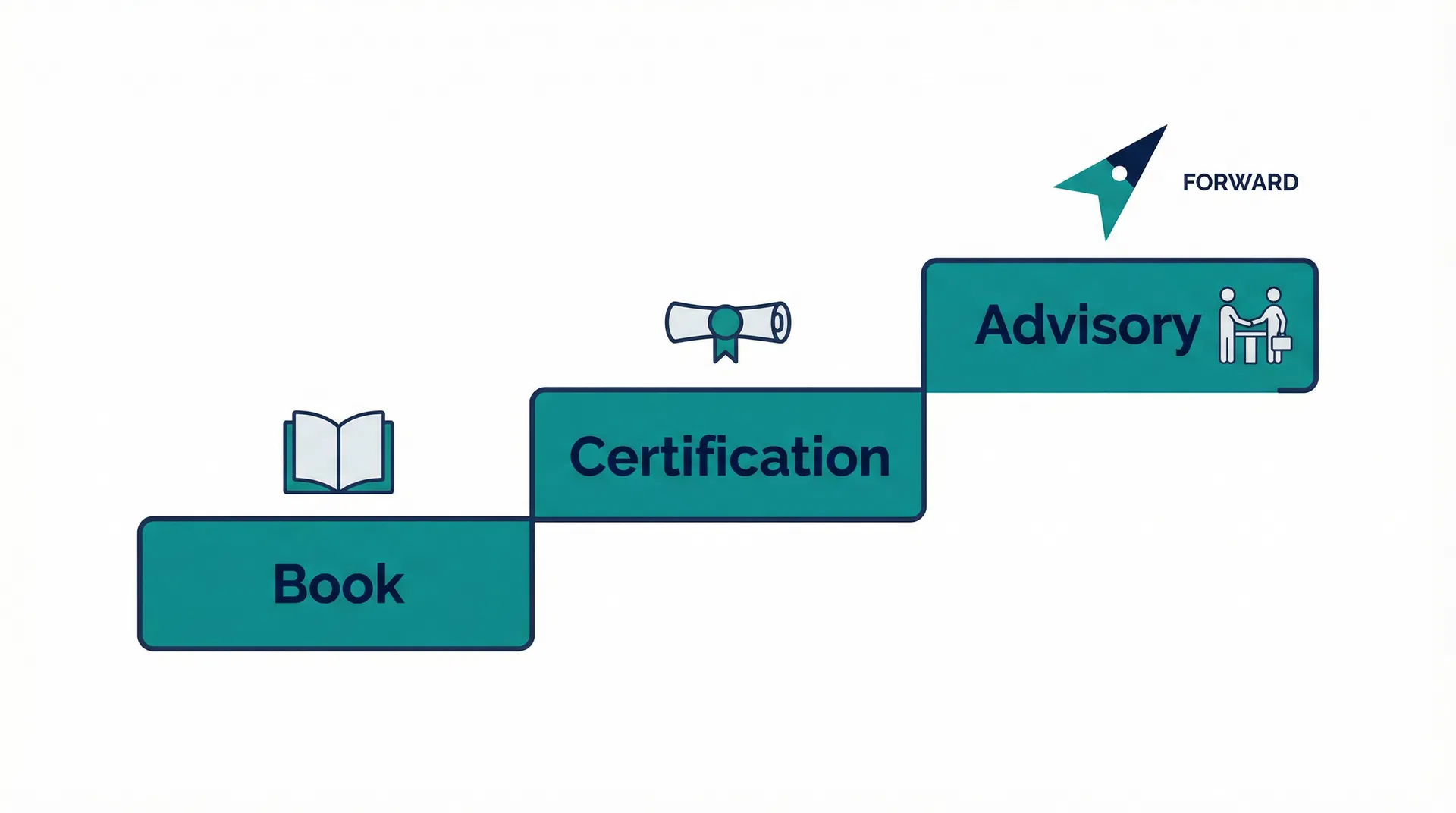
The Verus AI Compass ecosystem connects foundational learning with implementation support.
Make accountability specific
Assign a business owner who can accept, change or stop the deployment. Give the technical team responsibility for evidence about model behaviour, but do not expect it to resolve commercial trade-offs alone. Privacy, security, compliance and operational staff should contribute where their expertise is needed. Record the decision-maker, the review date and the conditions under which approval remains valid. Without these details, a risk register can become a collection of concerns that nobody has authority to resolve.
Consider an illustrative support assistant that drafts replies but cannot send them. The initial control is human review before release, not a promise that the model will never make a mistake. The owner should define which topics require escalation, whether personal information may enter the system and how staff can report an unsafe suggestion. If the assistant later gains permission to send replies automatically, that is a material change to the decision boundary and should trigger a new assessment.
Measure the behaviour that matters
Choose tests that reflect the consequences you identified. A general accuracy score may hide failures in the cases that matter most to customers. For a summarisation tool, review whether it omits important qualifications or invents details. For a support assistant, test how it handles uncertainty, sensitive requests and conflicting information. Describe the sample, the test conditions and the limits of the evidence. A small test can inform a limited trial, but it should not be presented as proof of performance in every setting.
A leadership workshop can help align the intended business outcome with practical governance controls.
NIST's Generative AI Profile, published on 26 July 2024, is a companion resource to the framework. It helps organisations consider risks associated with generative AI across the lifecycle. Teams should use the profile to challenge their assessment rather than copy its headings into a template. Ask which risks are plausible in your workflow, what evidence would reveal them and which response is available when a control fails.
- Define the boundary: State the intended use, affected people and excluded uses.
- Set the acceptance criteria: Describe what must be true before a trial can proceed.
- Test representative cases: Include difficult and unusual inputs, not only demonstrations.
- Record the decision: Name the owner, evidence, remaining concerns and review date.
Keep evidence usable after launch
An approval record should connect to the actual system version and operating process. Keep the model or provider version, prompt configuration, data sources and test results together where the responsible team can retrieve them. This does not mean copying every technical log into a board report. It means that a reviewer can trace a decision back to the evidence that supported it. If the provider changes the model or the team changes the workflow, the assessment should show whether the original evidence still applies.
| Review area | Useful evidence | Decision supported |
|---|---|---|
| Intended use and affected users | Workflow description and ownership record | Whether the scope is understood |
| Output reliability | Representative tests and known limitations | Whether a controlled trial is reasonable |
| Human oversight | Review instructions and escalation examples | Whether staff can intervene effectively |
| Operational change | Version history and incident records | Whether approval needs to be revisited |
Review outcomes, not just completed forms
Use regular reviews to examine real incidents, user feedback and changes in business use. Ask whether the control worked when the system behaved unexpectedly. If staff routinely ignore a warning because it appears on every output, the warning may not provide meaningful oversight. If a manual check is too slow for the workflow, redesign the process rather than assuming that the written policy will solve the problem. A useful review produces a decision to continue, limit, improve or stop the deployment.
Our advisory services support organisations working through more complex implementation decisions.
For founders and small product teams, proportionate governance can begin with a single owner, a concise assessment and a small set of representative tests. Larger organisations may need formal committees and independent challenge. The principle is the same: match the process to the consequences and retain evidence that supports the decision. Responsible AI becomes a practical business capability when teams can explain what they are doing, why it is acceptable and what would make them change course.
Sources and scope
The framework descriptions above draw on the official NIST AI Risk Management Framework and its Generative AI Profile. The support-assistant example and suggested workflow are illustrative editorial guidance, not reported case studies. This article is not legal advice. Check current regulator guidance and seek qualified advice where a deployment raises legal or high-impact questions.
(C) 2026 | All rights Reserved.
Subjects
Cite this article
Verus AI Compass Editorial Team. “Turning AI risk assessments into better business decisions.” Verus AI Compass Blog, 5 November 2026.
All articles